My area of specialization is observational dynamics, meaning, how stars move within astrophysical bodies. I have worked mostly with globular clusters and nearby dwarf galaxies. This work has led me and my colleagues to discover some interesting type of black holes. My publication and citation record can be found here.
Intermediate Mass Black Hole in omega centauri
The finding of compelling evidence for an intermediate mass black hole in omega centauri produced a few press releases from Gemini Observatory, the European Southern Observatory, and the Space Telescope Science Institute. A number of news outlets picked the news up, and I personally wrote a accounts of the discovery both in English, and in Spanish. There’s a hubblecast episode about it with me in it.
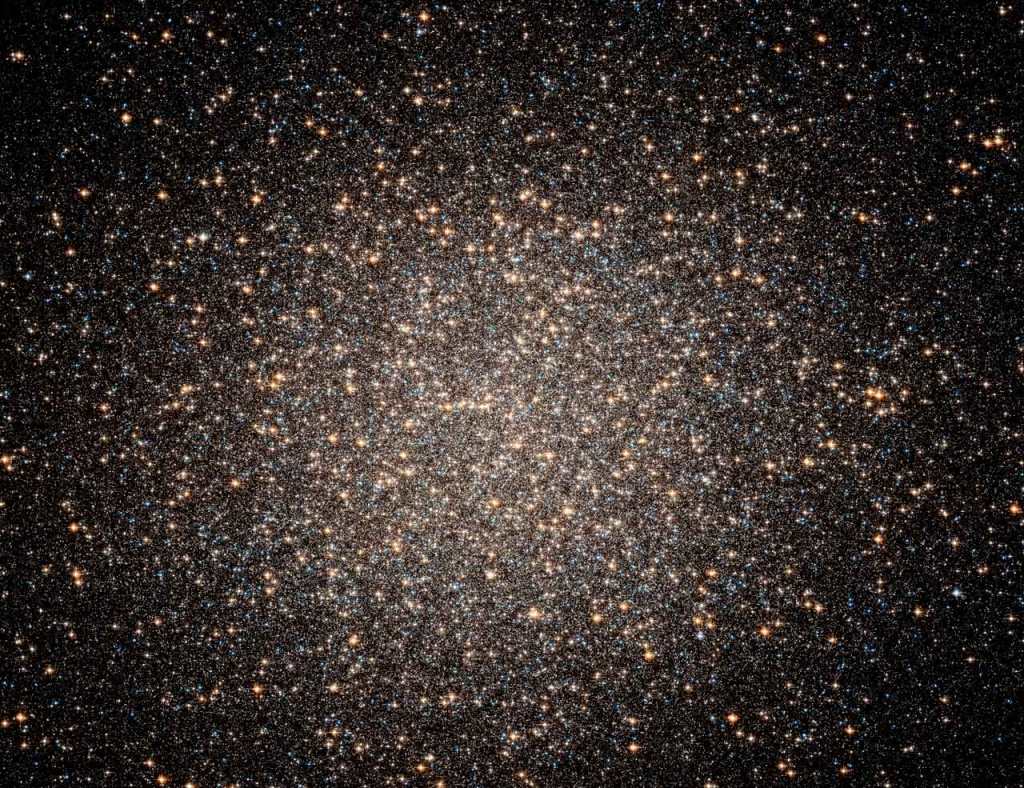
Globular Cluster Omega Centauri 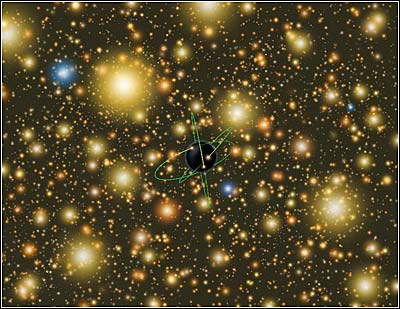
Illustration of Intermediate-Mass Black Hole
Photometry of resolved stellar systems
In principle, measuring light coming from individual stars should be easy, but when the stars are very near each other in a crowded environment, things get tricky. As part of my PhD, I developed a new technique to measure light profiles of globular clusters that uses both resolved and unresolved light. I tested the technique extensively with simulated images and I have recently used it successfully on dwarf galaxies as well. The results from the new technique are in some cases very different from previous measurements. The key is the use of robust statistical estimators.
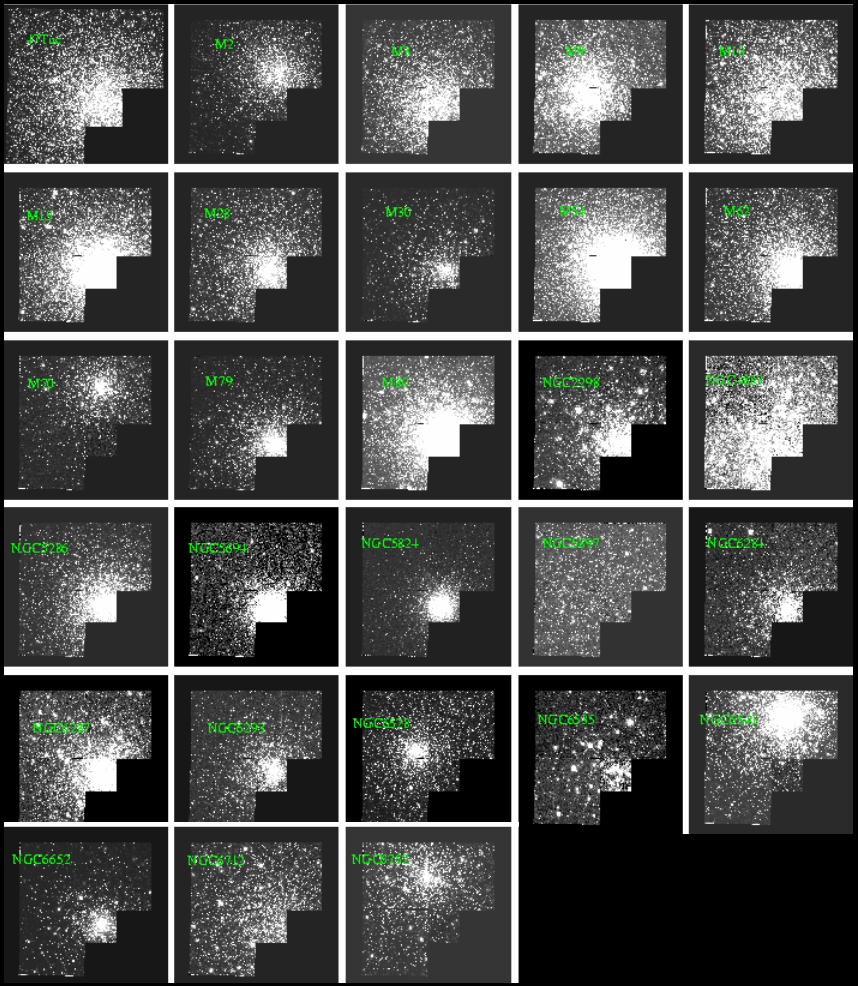
Globular cluster mosaic from Hubble Space Telescope
Observational kinematics using IFUs
Since I study extended objects, I have used Integral Field Unit (IFU) spectrographs for two decades. Such spectrographs allow to obtain spectra of multiple points for a 2D area of the sky. They are the preferred tool of dynamicists when measuring kinematics. The sofware used to deal with IFU data tends to be developed together with each instrument, which means that I have learned to use a wide array of specific software and I have developed my own tools as well.
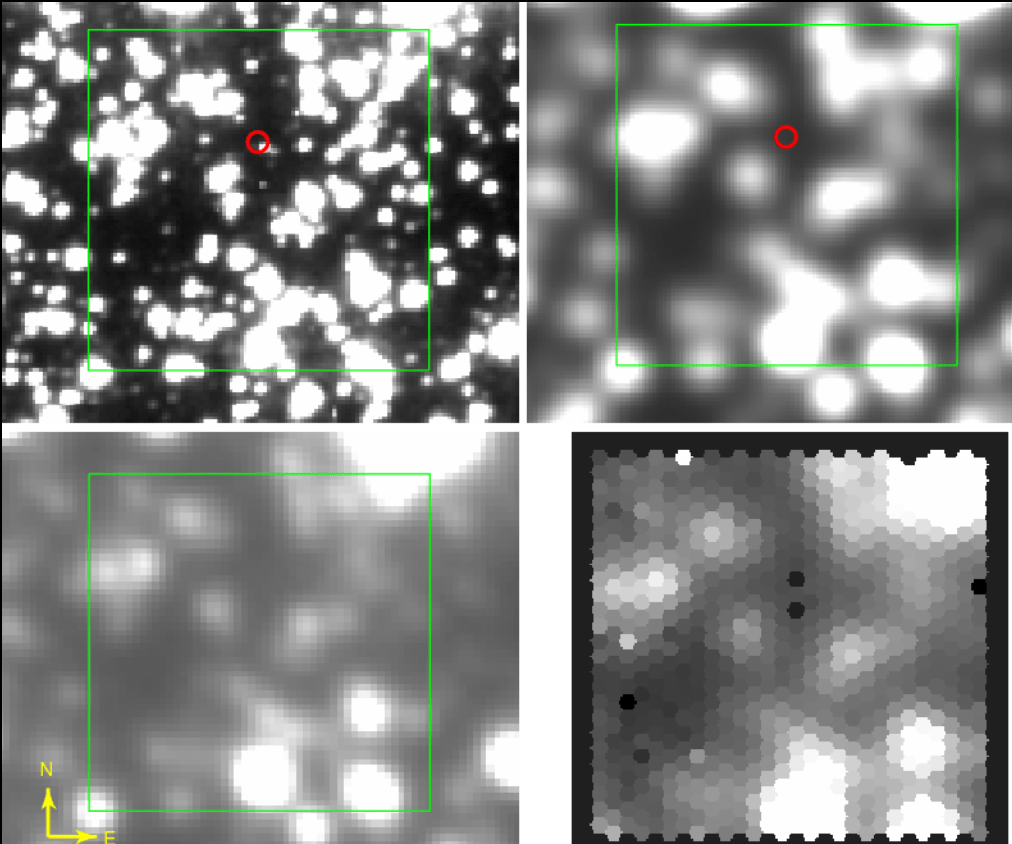
IFU observations of the center of Omega Centauri
Instrumentation
I have always worked at institutions that are heavily involved in instrument building and development. This resulted on every one of my positions including an instrumentation portion after obtaining my PhD. I have been involved in instrument development, fundraising, working on the science case for specific projects, all the way to working in a laboratory aligning cameras.
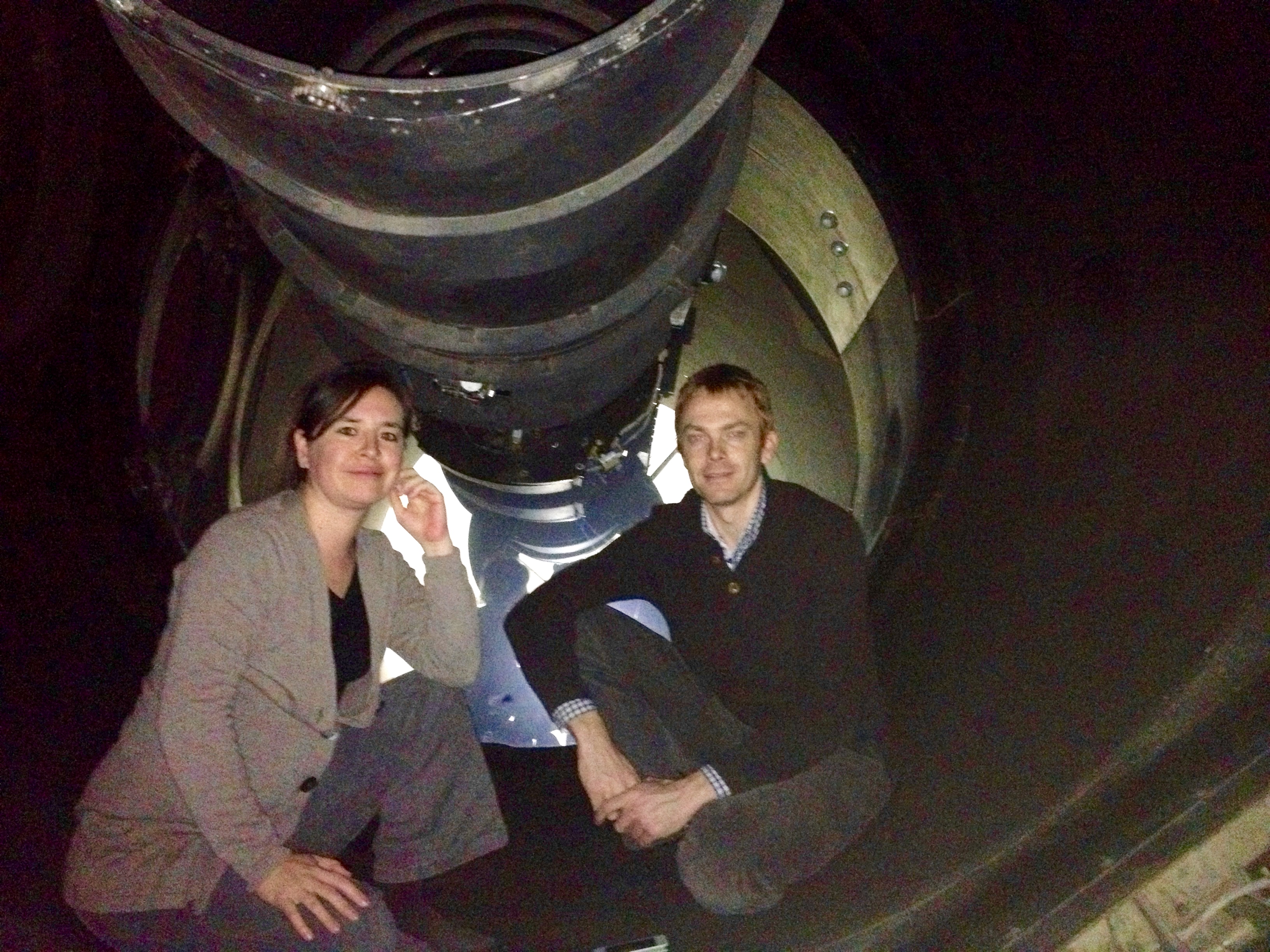
Inside a telescope 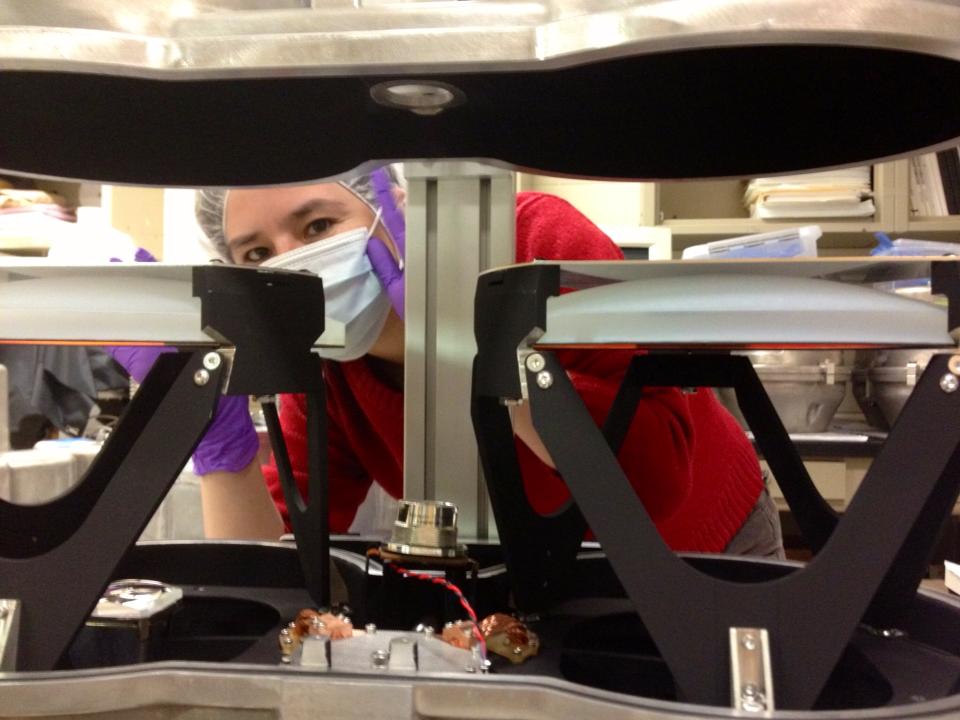
Building an instrument
Observing experience
I have been fortunate enough to use telescopes in Mexico, Hawaii, Chile, and Texas… also in Space, but one doesn’t get to go there, sadly. Some of them are state of the art, with specialized operators and a lot of support staff. Others are smaller, older, with minimal support staff, and so much fun! One really feels like an astronomer when pulling levers, pushing large buttons, and “driving” a telescope or dome around with a hand paddle. That’s my favorite type of observing.
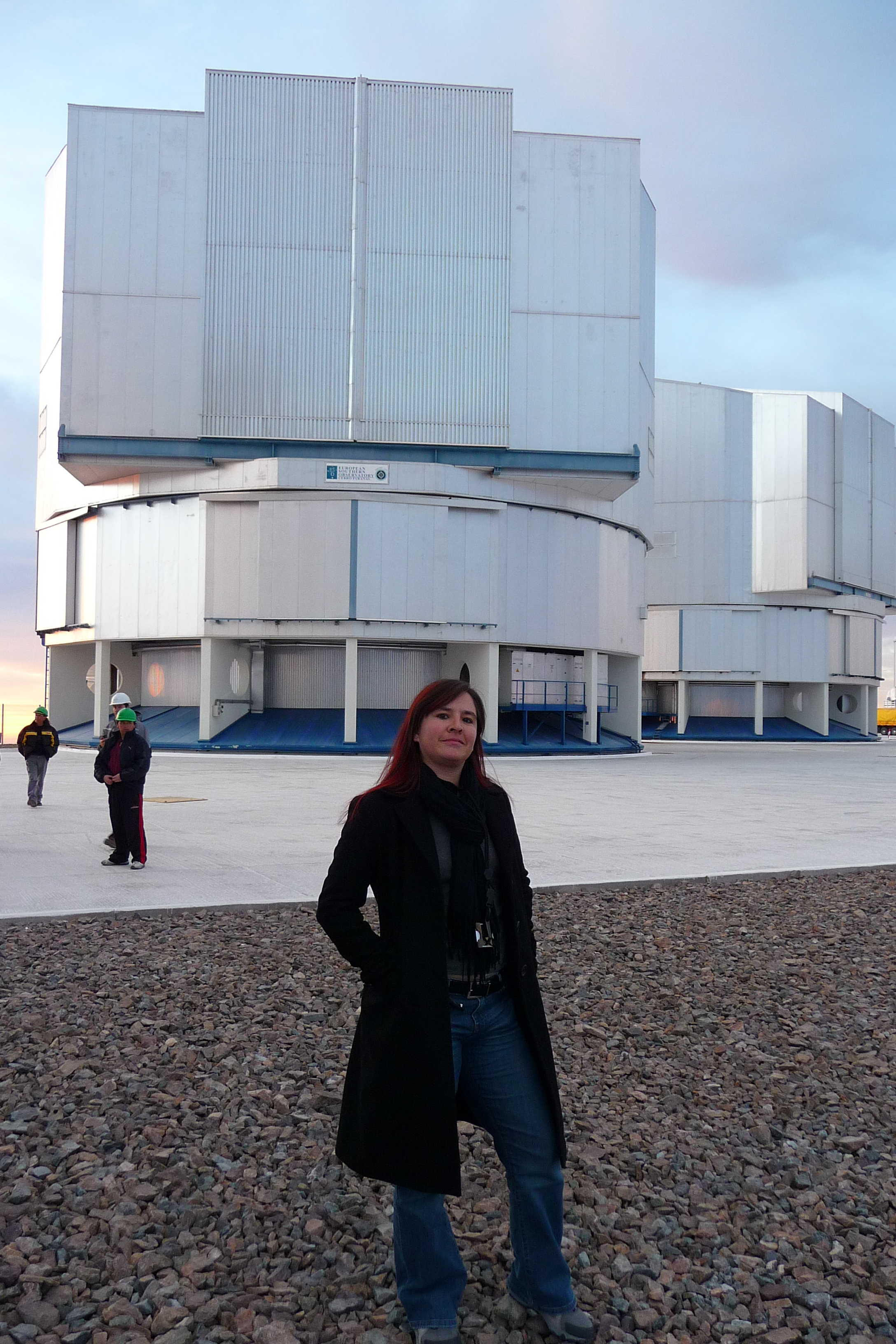
Very Large Telescope, Paranal 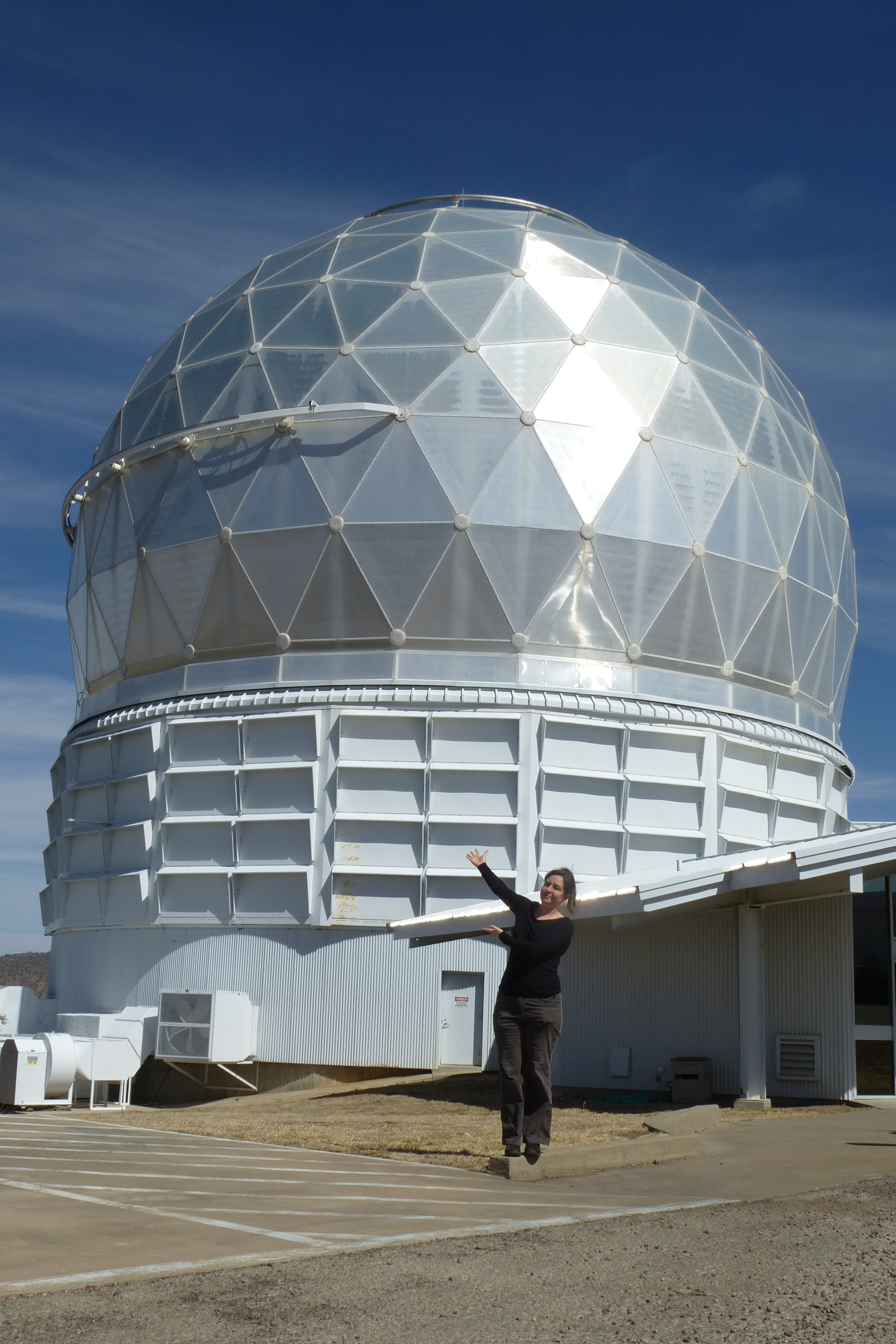
Hobby Eberly Telescope, McDonald 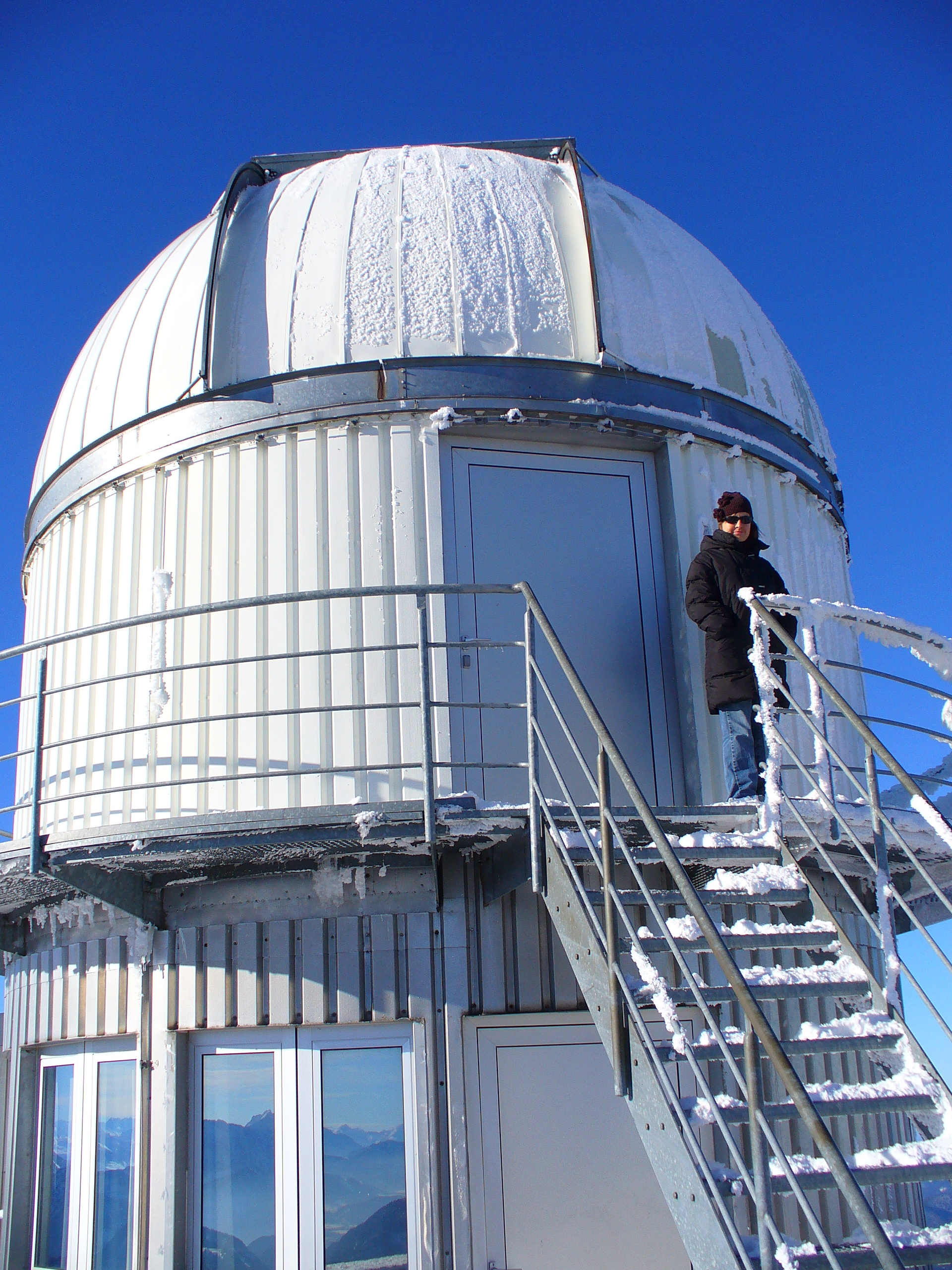
Wendelstein Observatory 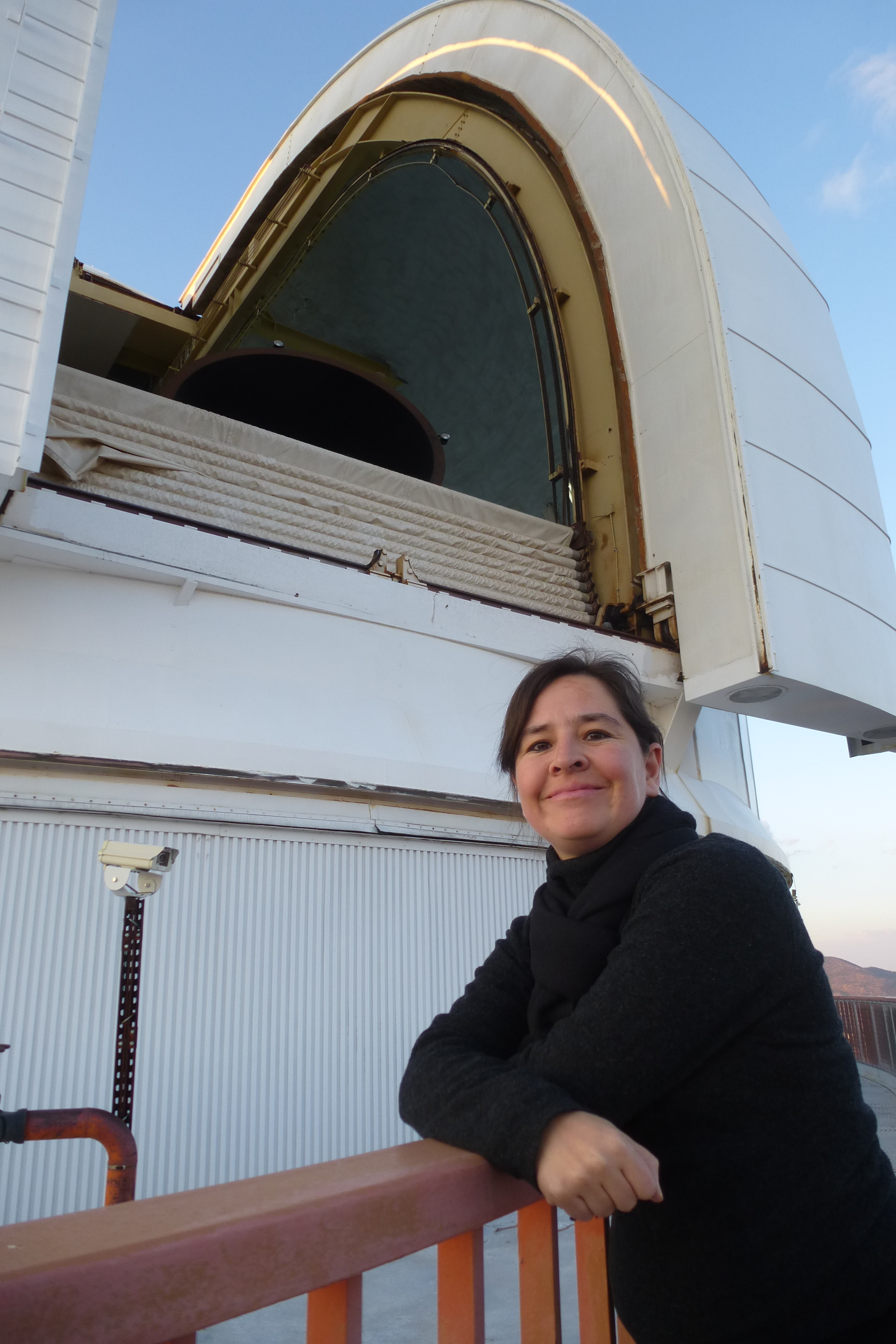
Harlan J Smith Telescope, McDonald 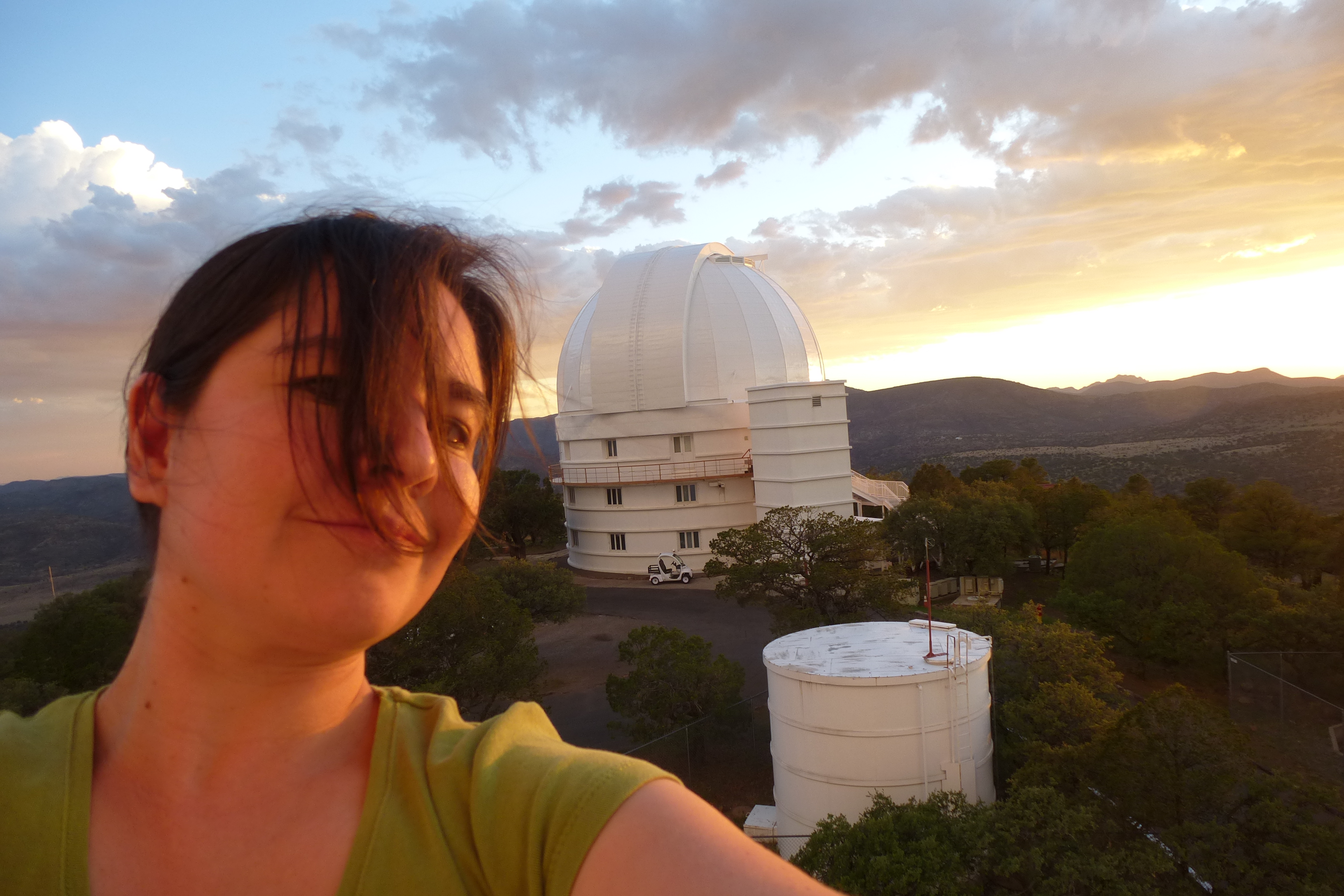
Otto Struve Telescope, McDonald 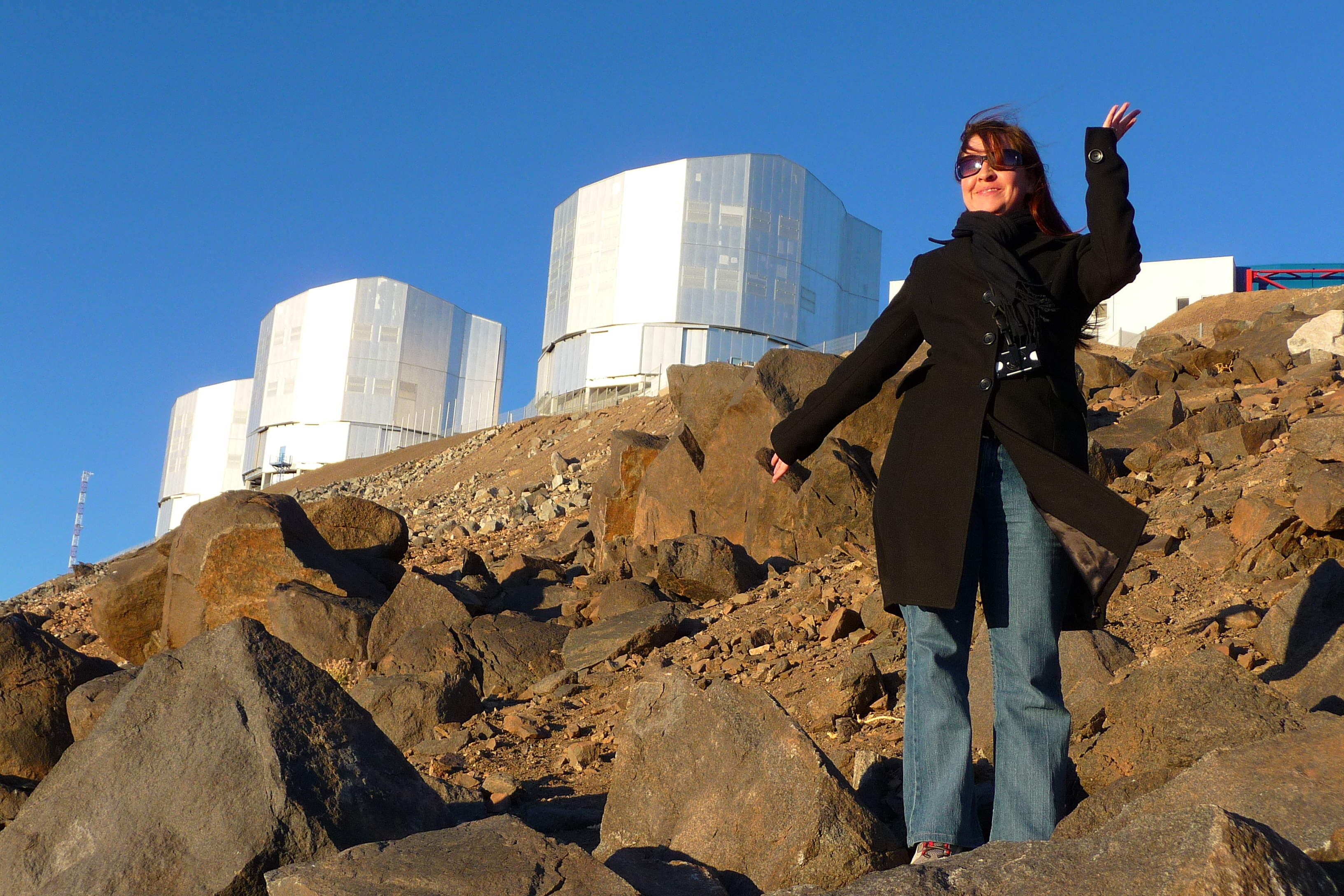
More VLT
 Dr Eva Noyola